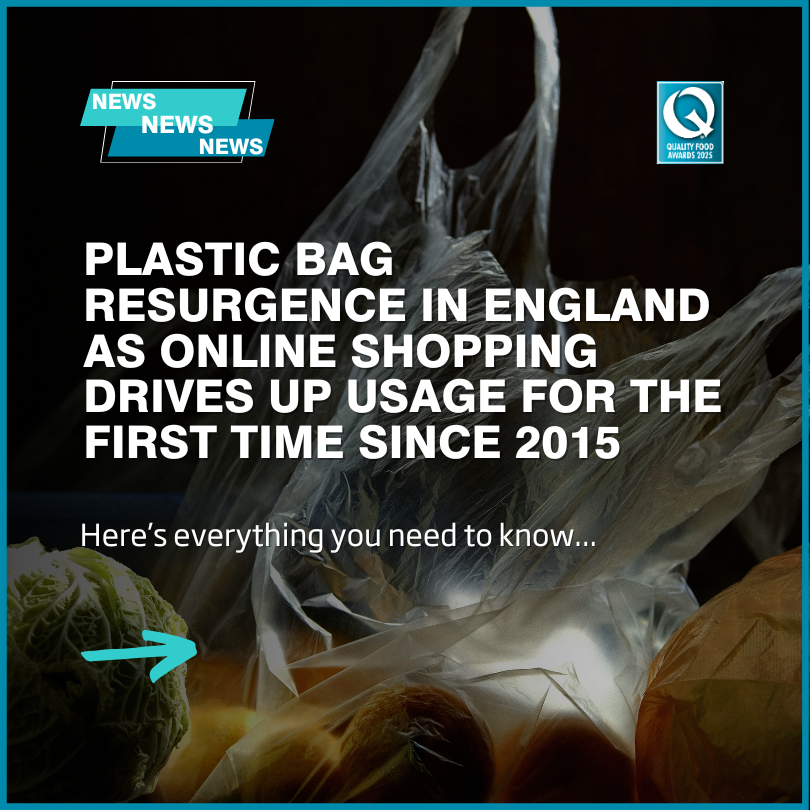
Plastic bag resurgence in England as online shopping drives up usage for the first time since 2015
Data reveals a 7% increase in plastic bag use in England, driven by the growth of online grocery deliveries, prompting supermarkets to expand recycling and reusable packaging initiatives amid ongoing environmental concerns.
For the first time since the introduction of the 5p charge on single-use plastic bags in 2015, the number of plastic bags used by consumers in England has risen. New data shows that 437 million plastic bags were purchased in the last year, a 7% increase from 407 million in the previous year. This unexpected growth reverses nearly a decade of decline and highlights a resurgence in plastic bag consumption, which experts primarily attribute to the rise of online shopping.
The Department for Environment, Food and Rural Affairs (Defra) figures reveal that online supermarket Ocado accounted for a striking 221 million of these plastic bags, representing 51% of all plastic bag sales in the UK. This marks a 30 million increase from the prior year, driven by Ocado’s expanding customer base. The packing methods used for home deliveries in online retail often involve single-use carrier bags, contributing significantly to the rise in plastic bag usage. Other major supermarkets such as Co-op, Morrisons, and Sainsbury’s have also reported increases in single-use plastic bag sales over the past year.
Despite this upward trend, supermarkets are taking steps to address the environmental impact. Ocado claims to operate a "closed-loop system" where 89% of the plastic bags used are returned by customers for recycling and reprocessing into new bags. Speaking to The Independent, an Ocado Retail spokesperson emphasised their commitment to minimising emissions and waste while ensuring delivery efficiency and product safety. They highlighted that their recycling scheme, established in 2015, allows customers to return plastic bags from any retailer in exchange for a refund.
Other retailers have made similar moves towards sustainability. Sainsbury’s has replaced single-use plastic bags with paper bags for its on-demand delivery services and expects a significant reduction in plastic bag sales as a result. Additionally, over half of Sainsbury’s delivery postcodes now receive groceries in small crates that customers unpack and return baglessly. Morrisons echoed this approach, focusing on expanding bagless delivery addresses while maintaining their own closed-loop recycling process.
Beyond bag recycling, Ocado is also pioneering a trial of reusable packaging for staples such as pasta, rice, and laundry products under its new Ocado Reuse brand. This initiative, introduced in two phases throughout 2024, allows customers to receive food and cleaning products in reusable containers with no extra cost. The scheme aims to further reduce the environmental footprint of online shopping packaging, a noteworthy development given the surge in plastic bag usage linked to home deliveries.
The rise in plastic bag use following years of decline draws attention to the environmental challenges posed by the growth of online shopping. While government initiatives and retailer efforts have curtailed single-use plastics in physical stores, adapting packaging for e-commerce remains an evolving challenge. The expansion of closed-loop recycling schemes and reusable packaging trials indicates a growing awareness within the industry, though the data underscores that the shift to online grocery shopping demands renewed focus on sustainable delivery methods.
Overall, while supermarkets are making progress towards reducing plastic waste, the surge in plastic bag use reflects how changing consumer habits necessitate continued innovation and stronger environmental strategies in retail packaging.