
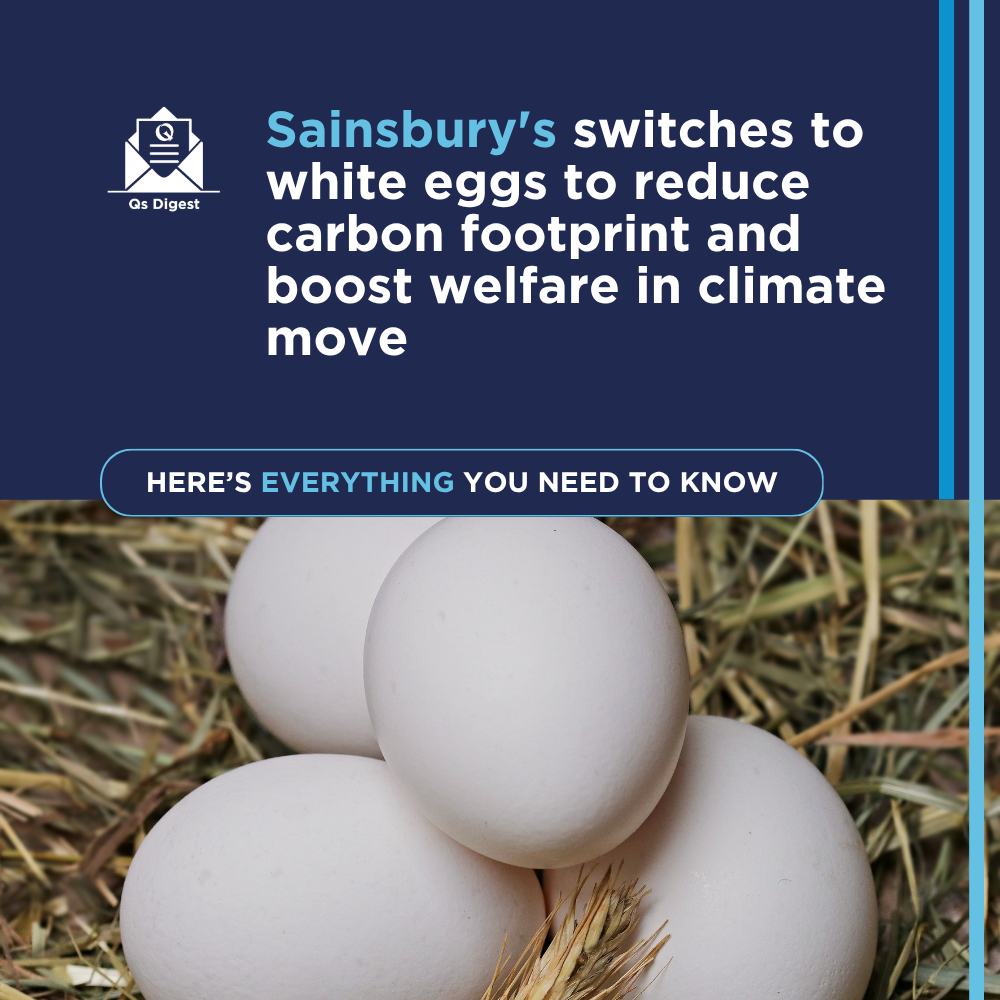
Sainsbury's switches to white eggs to reduce carbon footprint and boost welfare in climate move
Sainsbury's plans to change its own-label eggs from brown to white as part of its broader net zero strategy, citing lower emissions and improved animal welfare as key reasons for the shift amid ongoing environmental efforts.
Sainsbury's is preparing to change the colour of its own-label eggs, replacing brown shells with white ones in a move it says will help trim emissions across its supply chain. The supermarket's push sits within a wider environmental plan that brings forward its target for net zero in its own operations to 2035, while still aiming for net zero across the broader value chain by 2050, according to company statements.
The retailer says the switch is based on lifecycle assessments showing white eggs carry a 12.7% lower carbon footprint than brown eggs. Sainsbury's attributes the difference largely to the birds themselves: hens that lay white eggs are generally smaller, eat less feed and, as a result, place less pressure on land and water used to grow crops for that feed. The company also says the change can improve welfare outcomes because white-egg-laying hens are less prone to feather pecking.
Although the nutritional value is the same, the move could still stand out to shoppers because egg colour has long been shaped by British buying habits rather than by any practical difference in taste or quality. The British Egg Industry Council says white-egg-laying hens make up only around 15% of the UK's flock, a reflection of decades in which brown eggs became the default in supermarkets. In the United States, by contrast, white eggs dominate shelves.
Sainsbury's has already taken a series of other steps in its attempt to cut its environmental footprint. The company says it has reduced its carbon footprint by 47% over the past 17 years, despite expanding its operational space by more than 40%, and it plans to run all its supermarkets on renewable electricity and 100% LED lighting by the end of this year. It has also previously changed packaging for minced beef and altered cattle sourcing practices in efforts to reduce emissions.